
 Contact us
Jun 11, 2026•5 min read
Haryana GCC Policy 2026: What the Incentives Mean for GCC Location Decisions in NCR
Read More
Written by: Anurag Tyagi
Published at: 05/26/26
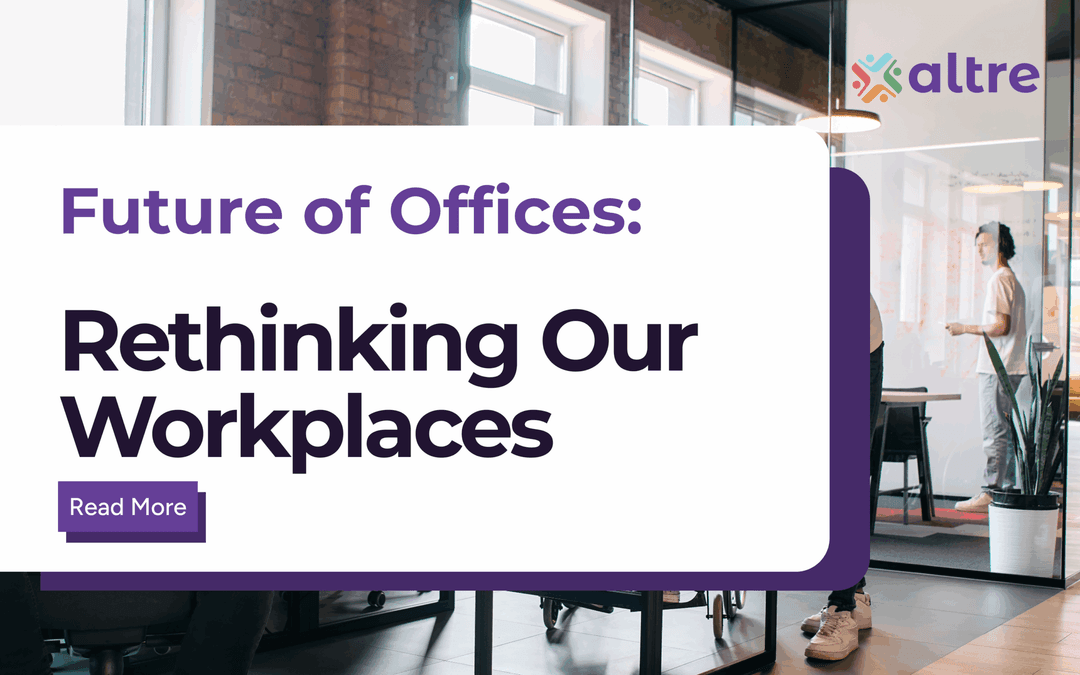
Across India's leading business markets, organizations are increasingly reassessing the role of the office, and what it should meaningfully deliver to both businesses and employees.
As hybrid work, evolving employee expectations, and changing business priorities continue to reshape the workplace, the office is increasingly being viewed not simply as a place of work, but as an environment that influences engagement, productivity, focus, and overall organizational effectiveness.
Altre's Office Fit-Out Playbook 2026 explores this transition and examines how organizations can approach workplace planning in a more strategic, measurable, and future-ready way.
For years, workplace strategy was largely driven by efficiency, maximising utilization, optimising layouts, and managing occupancy costs. This approach was focused on optimizing operating costs on fixed assets as low as possible. While these factors still matter, they are no longer sufficient on their own.
In 2026, organisations are evaluating workplaces through a much broader lens. Offices are now expected to support employee experience, focus, collaboration, talent retention, operational efficiency, and long-term business resilience simultaneously. This transition is fundamentally changing how occupiers approach office planning and fit-out decisions.
Traditional layouts designed around uniform workstations are gradually being replaced by more adaptive environments that respond to how teams actually function. The modern office is expected to accommodate multiple modes of work within the same ecosystem, from focused individual work, collaboration and informal interaction zones, to hybrid meetings and spaces that support concentration and creativity.
At the same time, workplace investments are being viewed more strategically. Businesses do not evaluate offices purely through upfront fit-out costs or rental efficiency. The conversation now includes lifecycle performance, sustainability, workplace adaptability, employee retention, and long-term operational value.
One of the biggest shifts accelerated by the post-pandemic workplace environment is the transformation in employee expectations. People have become accustomed to working from environments where they feel comfortable, autonomous, and personally in control of their surroundings. As a result, offices today are expected to deliver far more than functional workspaces. They are designed to support wellbeing, productivity, collaboration, and a stronger sense of belonging.
This shift is driving greater attention toward workplace health and environmental quality. Factors such as air quality, lighting, thermal comfort, acoustics, ergonomic planning, and access to natural elements (covered in our report) are now recognised as key contributors to concentration, energy levels, and overall employee experience.
Workplace Health and Environmental Quality: Air quality, lighting, thermal comfort, and acoustics are increasingly recognised as factors that directly influence employee wellbeing, cognitive performance, and overall experience. These elements are now being viewed as core workplace infrastructure rather than optional amenities.
Technology Integration: Technology is becoming increasingly embedded within workplace strategy. From occupancy analytics to energy management and workplace performance tracking, digital systems are helping organizations make more informed and efficient decisions.
Behavioral and Psychological Considerations: Organizations are placing greater emphasis on how an office space influences focus, concentration, interaction, inclusion, and psychological comfort. Behavioral science is beginning to play a more important role in workplace planning and employee experience design.
Sustainability and Long-Term Resilience: Sustainability is increasingly being linked with operational resilience and long-term business strategy. This is driving greater focus on energy efficiency, material selection, lifecycle performance, and adaptable workplace design.
At the same time, organisations are incorporating local design languages, regional materials, biophilic elements, and hospitality-inspired spaces to create spaces that feel more human, culturally connected, and psychologically comfortable.
The focus is gradually shifting from designing offices around occupancy metrics alone to creating environments that actively support performance, engagement, and employee connection throughout the workday.
With increasing complexities in workspace planning, organizations are adopting technology-driven approaches across the entire workplace lifecycle. From early-stage design and planning to project execution, workplace operations, and ongoing performance evaluation, technological intervention is necessary across the board. A technology-driven approach enables companies to create smarter, more efficient offices while continuously tracking how spaces perform through data, analytics, and operational insights.
The insights presented in Altre's Office Fit-Out Playbook 2026 are informed not only by evolving market trends but also by learnings derived from Altre's technology-led platform, which integrates end-to-end workplace design, delivery, and performance assessment.
Ultimately, the conversation around office design is becoming more outcome-oriented. The focus is shifting away from what a workplace looks like in isolation and toward what it enables an organization to achieve, whether that is stronger team engagement, sustained employee performance, operational efficiency, or long-term organisational resilience.
As workplace expectations continue to evolve, organizations that approach office design strategically, rather than purely operationally, are likely to be better positioned for the future.

Published: May 26, 2026
Discover more insights and expert perspectives on commercial real estate and business growth

Copyright © 2026. All rights reserved.